Chapter 2.8
Class 8 - Corrosive substances
- 2.8.1
- Definition, general provisions and properties
- 2.8.1.1
- Definition
- 2.8.1.1.1
- Corrosive substances are substances which, by chemical action, will cause irreversible damage to the skin, or, in the case of leakage, will materially damage, or even destroy, other goods or the means of transport.
- 2.8.1.1.2
- For substances and mixtures that are corrosive to skin, general classification provisions are provided in section 2.8.2. Skin corrosion refers to the production of irreversible damage to the skin, namely, visible necrosis through the epidermis and into the dermis occurring after exposure to a substance or mixture.
- 2.8.1.1.3
- Liquids and solids which may become liquid during transport, which are judged not to be skin corrosive shall still be considered for their potential to cause corrosion to certain metal surfaces in accordance with the criteria in 2.8.3.3.3.2.
- 2.8.1.1
- Properties
- 2.8.1.2.1
- In cases where particularly severe personal damage is to be expected, a note to that effect is made in the Dangerous Goods List in chapter 3.2 in the wording ''causes (severe) burns to skin, eyes and mucous membranes''.
- 2.8.1.2.2
- Many substances are sufficiently volatile to evolve vapour irritating to the nose and eyes. If so, this fact is mentioned in the Dangerous Goods List in chapter 3.2 in the wording ''vapour irritates mucous membranes''.
- 2.8.1.2.3
- A few substances may produce toxic gases when decomposed by very high temperatures. In these cases the statement ''when involved in a fire, evolves toxic gases'' appears in the Dangerous Goods List in chapter 3.2.
- 2.8.1.2.4
- In addition to direct destructive action in contact with skin or mucous membranes, some substances in this class are toxic or harmful. Poisoning may result if they are swallowed, or if their vapour is inhaled; some of them even may penetrate the skin. Where appropriate, a statement is made to that effect in the Dangerous Goods List in chapter 3.2.
- 2.8.1.2.5
- All substances in this class have a more or less destructive effect on materials such as metals and textiles.
- 2.8.1.2.5.1
- In the Dangerous Goods List, the term ''corrosive to most metals'' means that any metal likely to be present in a ship, or in its cargo, may be attacked by the substance or its vapour.
- 2.8.1.2.5.2
- The term ''corrosive to aluminium, zinc, and tin'' implies that iron or steel is not damaged in contact with the substance.
- 2.8.1.2.5.3
- A few substances in this class can corrode glass, earthenware and other siliceous materials. Where appropriate, this is stated in the Dangerous Goods List in chapter 3.2
- 2.8.1.2.6
- Many substances in this class only become corrosive after having reacted with water, or with moisture in the air. This fact is indicated in the Dangerous Goods List in chapter 3.2 by the words "in the presence of moisture…". The reaction of water with many substances is accompanied by the liberation of irritating and corrosive gases. Such gases usually become visible as fumes in the air.
- 2.8.1.2.7
- A few substances in this class generate heat in reaction with water or organic materials, including wood, paper, fibres, some cushioning materials and certain fats and oils. Where appropriate, this is indicated in the Dangerous Goods List in chapter 3.2.
- 2.8.2
- General classification provisions
- 2.8.2.1
-
Substances and mixtures of class 8 are divided among the three packing groups according to their degree of danger in transport:
Packing group I: very dangerous substances and mixtures;
Packing group II: substances and mixtures presenting medium danger;
Packing group III: substances and mixtures that present minor danger.
- 2.8.2.2
- Allocation of substances listed in the Dangerous Goods List in chapter 3.2 to the packing groups in class 8 has been made on the basis of experience taking into account such additional factors as inhalation risk (see 2.8.2.4) and reactivity with water (including the formation of dangerous decomposition products).
- 2.8.2.3
- New substances and mixtures can be assigned to packing groups on the basis of the length of time of contact necessary to produce irreversible damage of intact skin tissue in accordance with the criteria in 2.8.3. Alternatively, for mixtures, the criteria in 2.8.4 can be used.
- 2.8.2.4
- A substance or mixture meeting the criteria of class 8 having an inhalation toxicity of dusts and mists (LC50) in the range of packing group I, but toxicity through oral ingestion or dermal contact only in the range of packing group III or less, shall be allocated to class 8 (see note under 2.6.2.2.4.1).
- 2.8.3
- Packing group assignment for substances and mixtures
- 2.8.3.1
- Existing human and animal data including information from single or repeated exposure shall be the first line of evaluation, as they give information directly relevant to effects on the skin.
- 2.8.3.2
- In assigning the packing group in accordance with 2.8.2.3, account shall be taken of human experience in instances of accidental exposure. In the absence of human experience, classification shall be based on data obtained from experiments in accordance with OECD Test Guidelines Nos. 404, 435, 431 or 430. 1 2 3 4. A substance or mixture which is determined not to be corrosive in accordance with one of these or non-classified in accordance with OECD Test Guideline No. 439 245 may be considered not to be corrosive to skin for the purposes of this Code without further testing. If the in vitro test results indicate that the substance or mixture is corrosive and not assigned to packing group I, but the test method does not allow discrimination between packing groups II and III, it shall be considered to be packing group II. If the test results indicate that the substance or mixture is corrosive, but the test method does not allow discrimination between packing groups, it shall be assigned to packing group I if no other test results indicate a different packing group.
- 2.8.3.3
-
Packing groups are assigned to corrosive substances in accordance with the following criteria (see table 2.8.3.4):
Packing group I is assigned to substances that cause irreversible damage of intact skin tissue within an observation period of up to 60 minutes starting after the exposure time of three minutes or less.
Packing group II is assigned to substances that cause irreversible damage of intact skin tissue within an observation period of up to 14 days starting after the exposure time of more than three minutes but not more than 60 minutes.
Packing group III is assigned to substances that:
cause irreversible damage of intact skin tissue within an observation period up to 14 days starting after the exposure time of more than 60 minutes but not more than 4 hours; or
are judged not to cause irreversible damage of intact skin tissue but which exhibit a corrosion rate on either steel or aluminium surfaces exceeding 6.25 mm a year at a test temperature of 55°C when tested on both materials. For the purposes of testing steel, type S235JR+CR (1.0037 resp. St 37-2), S275J2G3+CR (1.0144 resp. St 44-3), ISO 3574, Unified Numbering System (UNS) G10200 or SAE 1020, and for testing aluminium, non-clad, types 7075–T6 or AZ5GU-T6 shall be used. An acceptable test is prescribed in the Manual of Tests and Criteria, part III, section 37.
Note: Where an initial test on either steel or aluminium indicates the substance being tested is corrosive, the follow-up test on the other metal is not required.
Table 2.8.3.4 - Table summarizing the criteria in 2.8.3.3 Packing group Exposure time Observation period Effect I ≤ 3 min ≤ 60 min Irreversible damage of intact skin II > 3 min ≤ 1 h ≤ 14 d Irreversible damage of intact skin III > 1 h ≤ 4 h ≤ 14 d Irreversible damage of intact skin III - - Corrosion rate on either steel or aluminium surfaces exceeding 6.25 mm a year at a test temperature of 55ºC when tested on both materials - 2.8.4
- Alternative packing group assignment methods for mixtures: step-wise approach
- 2.8.4.1
- General provisions
- 2.8.4.1.1
-
For mixtures it is necessary to obtain or derive information that allows the criteria to be applied to the mixture for the purpose of classification and assignment of packing groups. The approach to classification and assignment of packing groups is tiered, and is dependent upon the amount of information available for the mixture itself, for similar mixtures and/or for its ingredients. The flow chart of figure 2.8.4.1 below outlines the process to be followed:
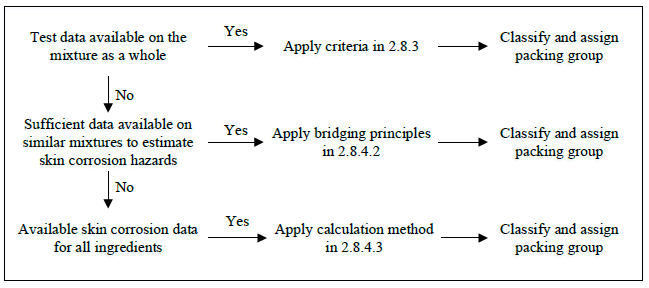
Figure 2.8.4.1 - Step-wise approach to classify and assignpacking group of corrosive mixtures - 2.8.4.2
- Bridging principles
- 2.8.4.2.1
-
Where a mixture has not been tested to determine its skin corrosion potential, but there are sufficient data on both the individual ingredients and similar tested mixtures to adequately classify and assign a packing group for the mixture, these data will be used in accordance with the following bridging principles. This ensures that the classification process uses the available data to the greatest extent possible in characterizing the hazards of the mixture.
- Dilution: If a tested mixture is diluted with a diluent which does not meet the criteria for class 8 and does not affect the packing group of other ingredients, then the new diluted mixture may be assigned to the same packing group as the original tested mixture.
Note: in certain cases, diluting a mixture or substance may lead to an increase in the corrosive properties. If this is the case, this bridging principle cannot be used.
Batching: The skin corrosion potential of a tested production batch of a mixture can be assumed to be substantially equivalent to that of another untested production batch of the same commercial product when produced by or under the control of the same manufacturer, unless there is reason to believe there is significant variation such that the skin corrosion potential of the untested batch has changed. If the latter occurs, a new classification is necessary.
Concentration of mixtures of packing group I: If a tested mixture meeting the criteria for inclusion in packing group I is concentrated, the more concentrated untested mixture may be assigned to packing group I without additional testing.
Interpolation within one packing group: For three mixtures (A, B and C) with identical ingredients, where mixtures A and B have been tested and are in the same skin corrosion packing group, and where untested mixture C has the same class 8 ingredients as mixtures A and B but has concentrations of class 8 ingredients intermediate to the concentrations in mixtures A and B, then mixture C is assumed to be in the same skin corrosion packing group as A and B.
- Substantially similar mixtures: Given the following:
two mixtures: (A+B) and (C+B);
the concentration of ingredient B is the same in both mixtures;
the concentration of ingredient A in mixture (A+B) equals the concentration of ingredient C in mixture (C+B); and
data on skin corrosion for ingredients A and C are available and substantially equivalent, i.e. they are the same skin corrosion packing group and do not affect the skin corrosion potential of B.
if mixture (A+B) or (C+B) is already classified based on test data, then the other mixture may be assigned to the same packing group.
- 2.8.4.3
- Calculation method based on the classification of the substances
- 2.8.4.3.1
-
Where a mixture has not been tested to determine its skin corrosion potential, nor is sufficient data available on similar mixtures, the corrosive properties of the substances in the mixture shall be considered to classify and assign a packing group.
Applying the calculation method is only allowed if there are no synergistic effects that make the mixture more corrosive than the sum of its substances. This restriction applies only if packing group II or III would be assigned to the mixture.
- 2.8.4.3.2
- When using the calculation method, all class 8 ingredients present at a concentration of ≥ 1% shall be taken into account, or < 1% if these ingredients are still relevant for classifying the mixture to be corrosive to skin.
- 2.8.4.3.3
- To determine whether a mixture containing corrosive substances shall be considered a corrosive mixture and to assign a packing group, the calculation method in the flow chart in figure 2.8.4.3 shall be applied. For this calculation method, generic concentration limits apply where 1% is used in the first step for the assessment of the packing group I substances, and where 5% is used for the other steps respectively. For this calculation method, generic concentration limits apply where 1% is used in the first step for the assessment of the packing group I substances, and where 5% is used for the other steps respectively.
- 2.8.4.3.4
- When a specific concentration limit (SCL) is assigned to a substance following its entry in the Dangerous Goods List or in a special provision, this limit shall be used instead of the generic concentration limits (GCL).
- 2.8.4.3.5
-
For this purpose, the summation formula for each step of the calculation method shall be adapted. This means that, where applicable, the generic concentration limit shall be substituted by the specific concentration limit assigned to the substance(s) (SCLi), and the adapted formula is a weighted average of the different concentration limits assigned to the different substances in the mixture:
\( \frac{ {PGx}_{1} }{GCL} + \frac{ {PGx}_{2} } {SCL_{2}} + \cdot \cdot \cdot + \frac{ {PGx}_{i} } {SCL_{i}} { \geq 1} \)
Where: PGxi = concentration of substance 1, 2 …i in the mixture, assigned to packing group x (I, II or III)
GCL = generic concentration limit
SCLi = specific concentration limit assigned to substance i
The criterion for a packing group is fulfilled when the result of the calculation is ≥ 1. The generic concentration limits to be used for the evaluation in each step of the calculation method are those found in figure 2.8.4.3.
Examples for the application of the above formula can be found in the note below.
Note: Examples for the application of the above formula
Example 1: A mixture contains one corrosive substance in a concentration of 5% assigned to packing group I without a specific concentration limit:
Calculation for packing group I: \(\frac{5 }{5 (GCL)} = 1 {} \) → assign to class 8, packing group I.
Example 2: A mixture contains three substances corrosive to skin; two of them (A and B) have specific concentration limits; for the third one (C) the generic concentration limits applies. The rest of the mixture needs not to be taken into consideration.
Subsuance X in the mixture and its packing group assignment within class 8 Concentration (cont) in the mixture in % Specific concentration limit (SCL) for packing group I Specific concentration limit (SCL) for packing group II Specific concentration limit (SCL) for packing group III A, assigned to packing group I 3 30% none none B, assigned to packing group I 2 20% 10% none C, assigned to packing group III 10 none none none Calculation for packing group I: \( \frac{ {3 \textit{(conc A)}} }{30 ( \textit {SCL PGI}) } + \frac{ {2 \textit{(conc B)}} }{20 ( \textit {SCL PGI})} = 0.2 < 1 \)
The criterion for packing group I is not fulfilled.
Calculation for packing group II: \( \frac{ {3 \textit{(conc A)}} }{5 ( \textit {GCL PG II})} + \frac{ {2 \textit{(conc B)}} }{10 ( \textit {SCL PG II})} = 0.8 < 1 \)
The criterion for packing group II is not fulfilled.
Calculation for packing group III: \( \frac{ {3 \textit{(conc A)}} }{5 ( \textit {GCL PG III})} + \frac{ {2 \textit{(conc B)}} }{5 ( \textit {GCL PH III})} + \frac{ {10 \textit{(conc C)}} }{5 ( \textit {GCL PH III})} = 3 \geq 1 \)
The criterion for packing group III is fulfilled, the mixture shall be assigned to class 8, packing group III.
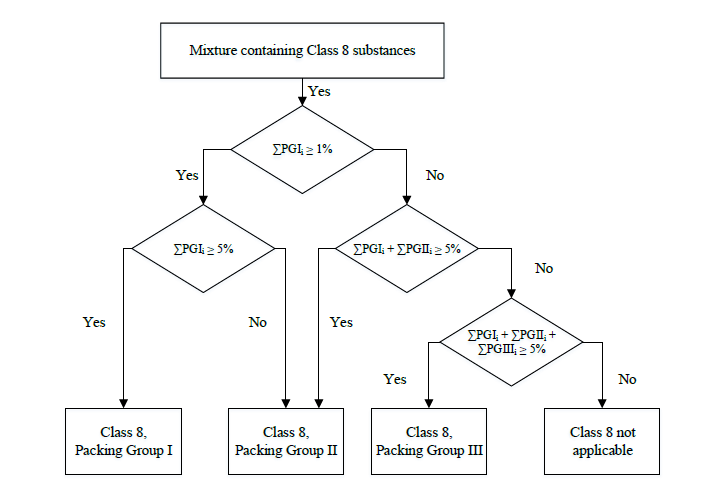
Figure 2.8.4.3 - Calculation method - 2.8.5
-
Substances not accepted for transport
Chemically unstable substances of class 8 shall not be accepted for transport unless the necessary precautions have been taken to prevent the possibility of a dangerous decomposition or polymerization under normal conditions of transport. For the precautions necessary to prevent polymerization, see special provision 386 of chapter 3.3. To this end particular care shall be taken to ensure that receptacles and tanks do not contain any substances liable to promote these reactions.